A chronic pain that resists anti-inflammatories, disturbed sleep despite sleeping pills, fatigue that blood tests do not explain. These situations drive more and more patients each year towards complementary practices like acupuncture, osteopathy, or naturopathy. The reflex is understandable, but it raises a concrete question: how to explore these approaches without risking one’s health?
University degrees in alternative medicine: a label that can be misleading
Have you ever noticed a practitioner displaying a “university degree” in aromatherapy or homeopathy? This title is reassuring. It gives the impression of solid scientific validation.
The reality is more nuanced. A government report from January 2026 and surveys reported by Le Dauphiné Libéré in April 2026 reveal that some university degrees confer unfounded legitimacy to unconventional practices. Hugues Gascan, from the Group for the Study of Pseudo-Sciences (GéPS), points to financial motivations: training costs between 1,500 and 5,000 euros per participant, a windfall for underfunded universities.
The Conference of Deans of Medicine is preparing a dedicated session to evaluate and withdraw problematic degrees. The Order of Physicians, through Dr. Hélène Harmand-Icher, emphasizes the risk of confusion for the public. A university degree does not equate to scientific recognition of the practice taught.
To navigate this landscape and identify approaches that are truly documented, the Art de Guérir website offers an overview of different therapies along with their respective practice frameworks.
Supervised hybrid care pathway by a physician: the only safe approach
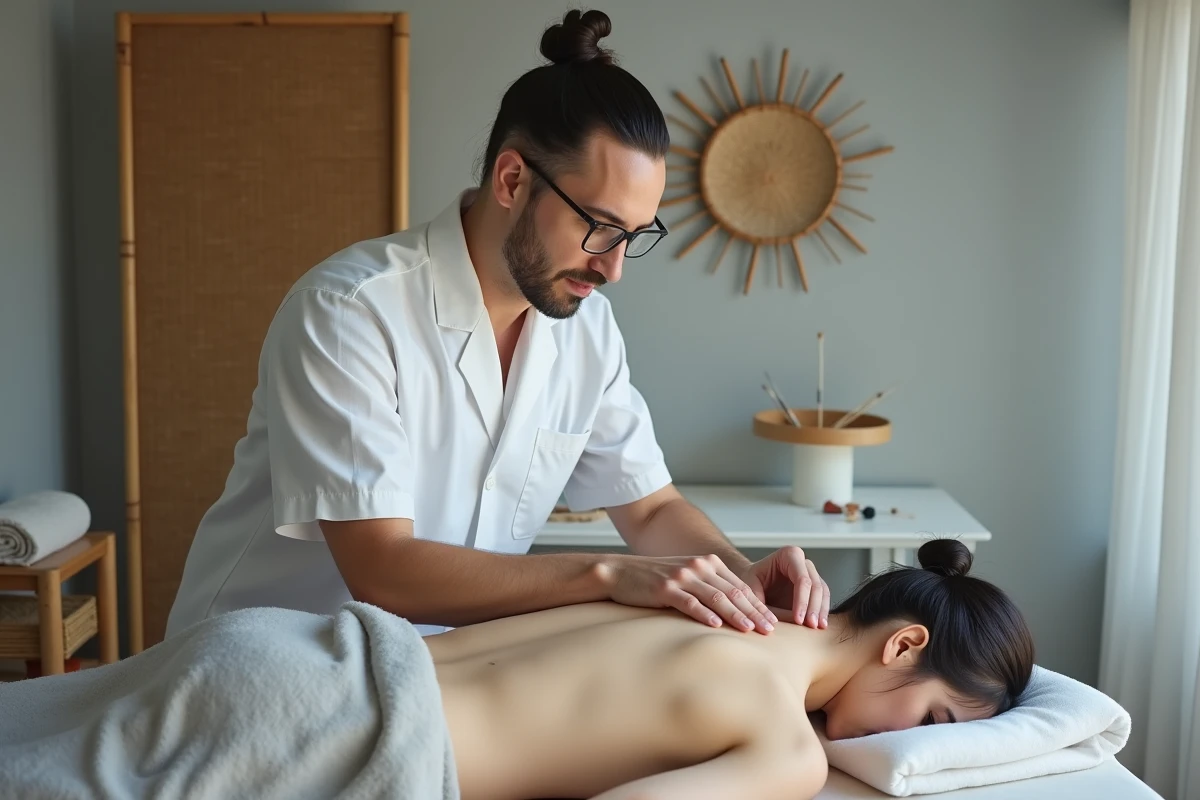
Acupuncture performed by a contracted physician benefits from ordinal recognition. It is one of the few complementary practices with a clearly defined framework in France. For other approaches, regulatory ambiguity remains the norm.
This ambiguity does not mean that all practices are equal or that they are all dangerous. It means that the treating physician remains the only reliable safeguard in a care pathway that integrates complementary therapies.
Why self-diagnosis with gentle medicine is problematic
A patient who consults a naturopath for persistent fatigue without having undergone prior medical evaluation is taking a real risk. Fatigue can mask anemia, a thyroid disorder, or a more serious condition. The non-medical practitioner lacks the training and tools to make a differential diagnosis.
The danger does not come from the complementary practice itself. The danger comes from abandoning or delaying a validated treatment. A session of sophrology to manage anxiety related to chemotherapy makes sense. Replacing chemotherapy with essential oils does not.
Building a concrete hybrid pathway
A care pathway that safely integrates complementary medicines is based on a few simple principles:
- The treating physician makes the diagnosis and validates the main treatment before any complementary approach. They remain informed of each additional consultation.
- The chosen complementary practitioner is either a physician themselves (ordinal acupuncture, homeopathy prescribed by a general practitioner) or recommended by the treating physician who knows their limits of competence.
- No conventional treatment is modified or interrupted without the explicit consent of the prescribing physician, even if the complementary practitioner suggests it.
- The effects felt (positive or negative) are systematically reported to the treating physician during the next consultation.
Complementary medicines in daily life: what pertains to well-being and what pertains to care
The confusion between well-being and care fuels much of the misunderstandings. A relaxing massage, a guided meditation session, a yoga class: these practices improve daily life without claiming to treat an illness. No one disputes their value.
The problem arises when a well-being practice is presented as a treatment. When an energy healer claims to “rebalance the body” to treat a diagnosed condition, they step outside their area of competence. Well-being complements care; it never replaces it.
Three guidelines to evaluate a practice
Before committing to a complementary therapy, three questions can quickly assess the reliability of the approach:
- Does the practitioner accept that you inform your treating physician about their care? A refusal or reluctance is an immediate warning signal.
- Does the practice have clinical studies published in peer-reviewed journals? Acupuncture has been the subject of numerous publications. Other practices rely solely on individual testimonials.
- Does the practitioner promise a cure or improvement? Any promise of healing through a non-conventional practice should raise alarms. Serious professionals talk about support, not guaranteed results.
Integrative medicine: a framework that is slowly progressing in France
Integrative medicine combines conventional treatments and validated complementary approaches within a coordinated care pathway. Several French hospitals offer acupuncture or hypnosis consultations for pain management, supervised by physicians.
This model remains minority. The recent regulatory distinction between ordinal acupuncture (reserved for physicians) and other unconventional practices open to non-physicians illustrates the difficulty of structuring this field. The Ministry of Health and the Order of Physicians actively monitor the infiltration of certain practices into medical schools.
The challenge in the coming years will be the healthcare system’s ability to integrate practices that have demonstrated measurable benefits while excluding those based on fragile foundations. For the patient, the rule remains the same: any complementary approach should be discussed with their treating physician before being undertaken. This is the condition for these approaches to provide real benefits without creating additional risks.