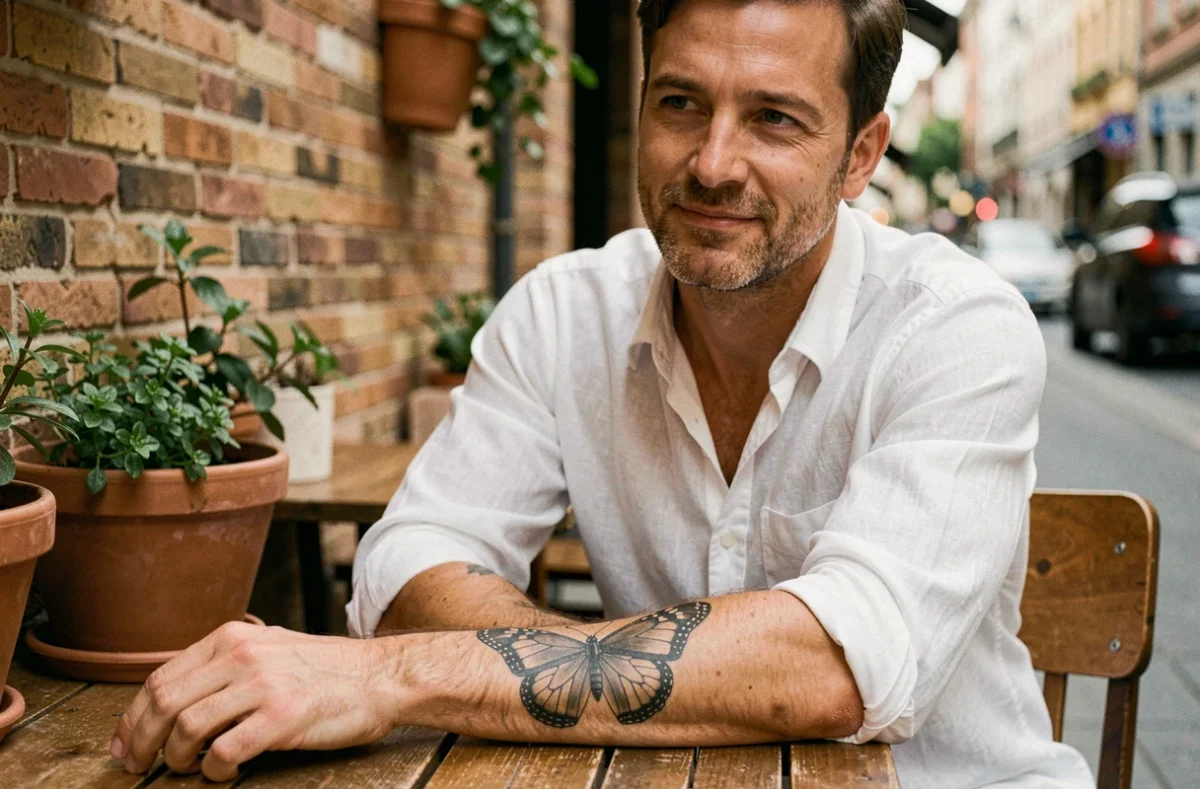
A butterfly tattoo on a man’s arm doesn’t age the same way depending on the style, the size of the design and the area of the body. Before choosing a butterfly tattoo design for men, the key question is less about its immediate appearance than whether the design will remain legible after several years. The ink, placement and level of detail all determine how well the design holds up visually over time.
How butterfly tattoo styles compare for long-term legibility
Not all tattoo styles stand the test of time equally well. A fine-line butterfly and a blackwork butterfly won’t look the same after ten years. The table below summarizes the characteristics of each approach for a masculine butterfly design.
| Style | Level of detail | How it holds up over time | Suitable areas |
|---|---|---|---|
| Blackwork | Low to medium | Excellent (dense black fills) | Arm, chest, calf |
| Geometric | Medium | Good if the lines remain thick | Forearm, shoulder |
| Fine line | High | Variable (fine lines fade) | Wrist, neck, ankle |
| Old school / Traditional | Medium | Excellent (thick outlines, saturated colors) | Arm, thigh |
| Realistic | Very high | Average (shading and nuances blur) | Chest, back, thigh |
Styles with thick outlines and dense fills (blackwork, old school) retain their crispness over time. Fine-line or highly detailed styles require more touch-ups, sometimes as early as the third year.
Among the most popular butterfly tattoo ideas for men, geometric designs and moths stand out for balancing visual originality with technical durability.
Butterfly tattoo placement for men: how the skin shapes the design
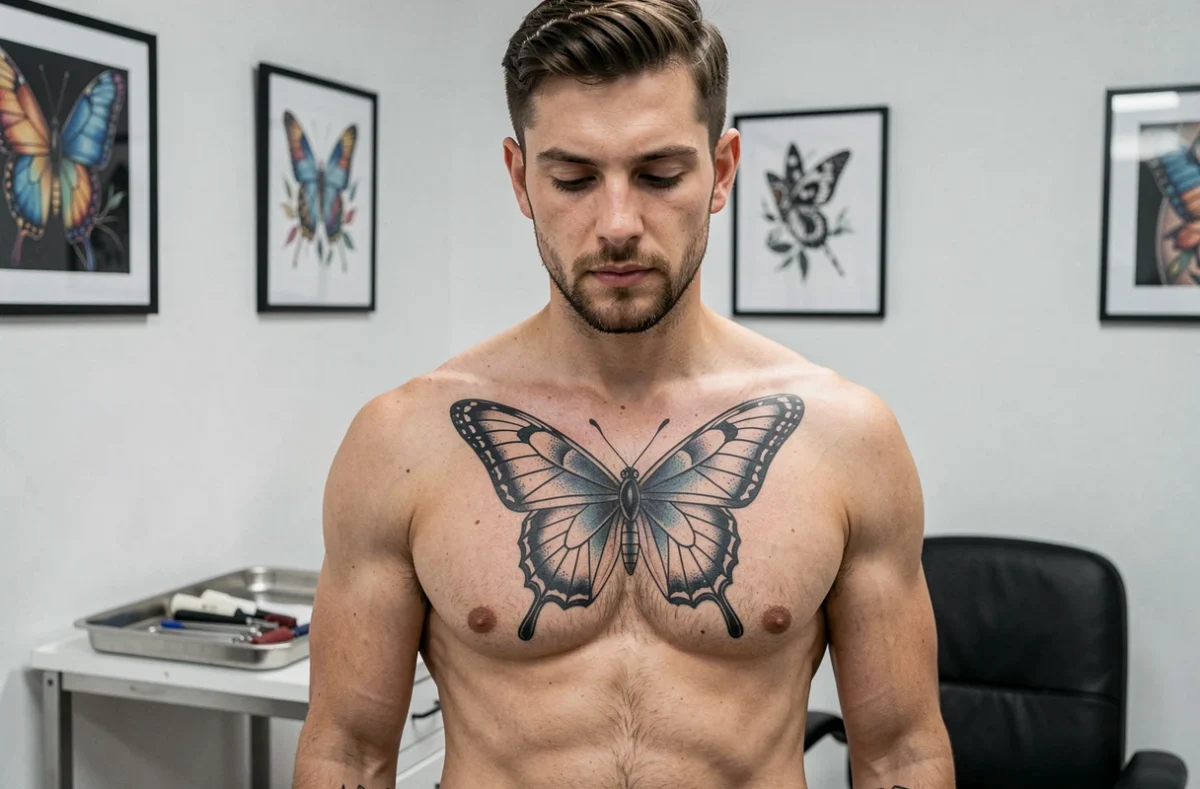
Choosing where to place a tattoo isn’t just about how visible it will be to others. Skin texture and movement directly affect how the design ages. Areas exposed to regular friction (inner arm, side, hand) wear ink faster than stable surfaces such as the shoulder blade or outer thigh.
Sun exposure is just as important. A butterfly on the forearm or calf gets UV exposure every time you go out in summer. Keeping freshly tattooed skin out of the sun is one of the basic aftercare instructions, but even after it heals, UV rays break down pigments—especially light colors.
Best areas for a detailed butterfly
- The outer arm (biceps, triceps) provides a flat, relatively stable surface, ideal for a medium-sized design with fine details
- The upper back or shoulder blade allows for a large, symmetrical butterfly, with slower aging thanks to limited sun exposure
- The outer thigh offers a broad, protected area suited to realistic designs or butterflies incorporated into a sleeve
Areas such as the fingers, palm or neck remain popular on social media, but an experienced tattoo artist will warn you that fine lines in these locations lose their crispness within a few years.
Colored butterfly tattoo inks: a regulatory requirement to check
A realistic or old-school butterfly often features bright colors (blue, orange, red). Since January 2022, the European REACH regulation has restricted certain substances in tattoo inks. Before the appointment, the studio must provide the client with the information shown on the packaging, including the list of ingredients and the batch number.
This requirement has a practical impact on design choices. Some shades (turquoise, orange) can be difficult to remove with laser treatment later on. The number of laser sessions depends on the pigment’s density, depth and color. Turquoise and orange inks are among the hardest to remove.
Color or black: choosing with the long term in mind
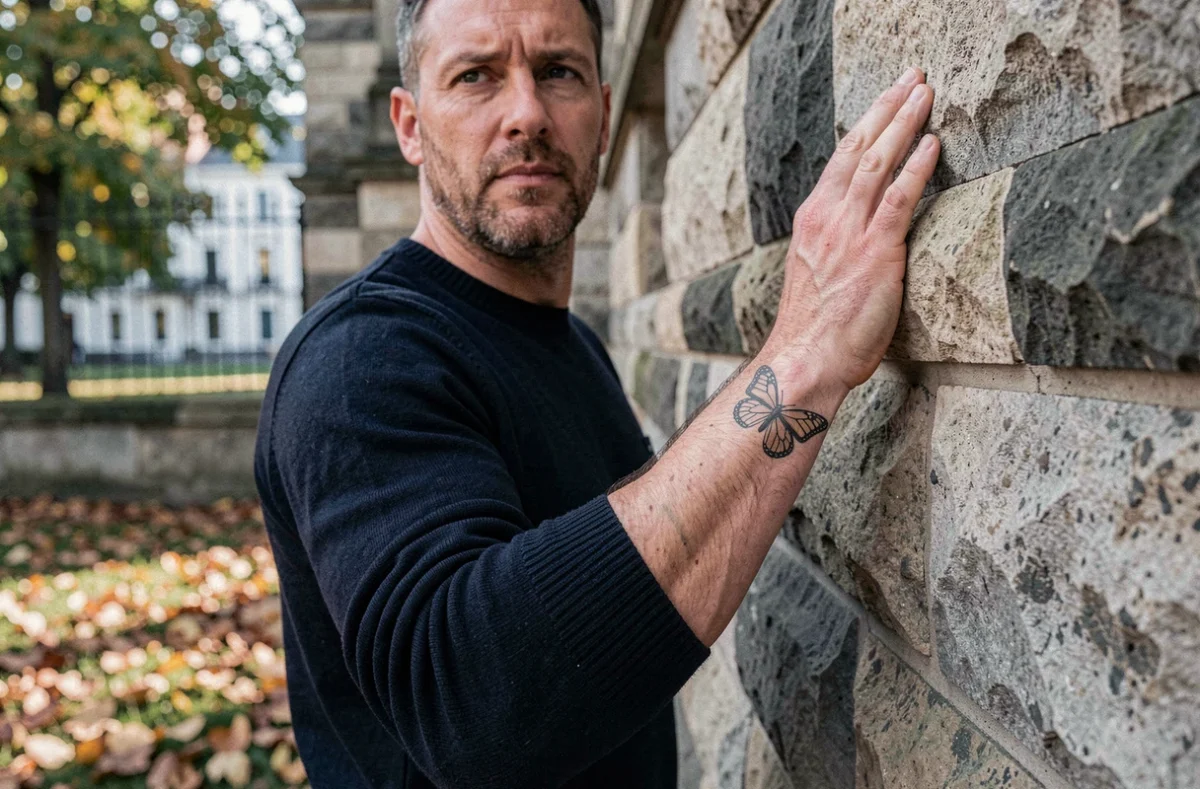
For a butterfly tattoo intended to be permanent, black and gray offer the best staying power and are the easiest to touch up. A monochrome butterfly in blackwork or dotwork keeps its contrast far longer than a multicolored version.
If you’re set on color, it’s worth asking the tattoo artist which ink brands they use and checking that they comply with REACH. A studio that displays its compliance certificates inspires more confidence than one that dodges the question.
Butterfly tattoos and accompanying elements: creating a cohesive masculine design
A butterfly on its own can look minimalist. The most successful masculine designs pair it with elements that reinforce its symbolic meaning.
- A moth combined with a skull evokes the duality of life and death, a recurring theme in traditional men’s tattooing for more than a century
- A butterfly incorporated into sacred geometry (mandala, construction lines) adds structure to the design and makes it easier to read, even at a small size
- Pairing a butterfly with a dagger or snake gives the design a distinctly old-school feel, with thick outlines that age well
- A realistic butterfly set against a background of smoke or splattered ink (trash polka) creates a strong visual contrast, suited to larger areas such as the chest or thigh
The accompanying elements also determine the minimum size of the tattoo. The more elaborate the composition, the more space it needs to ensure every element remains legible over time.
Transformation, freedom and rebirth aren’t symbols reserved for any one gender. What makes a masculine butterfly tattoo successful has more to do with the technical precision of the design and how realistically it accounts for the skin’s limitations than with style alone. A well-proportioned design, placed on a stable area and created with compliant inks will stand the test of time without losing what made it legible from day one.