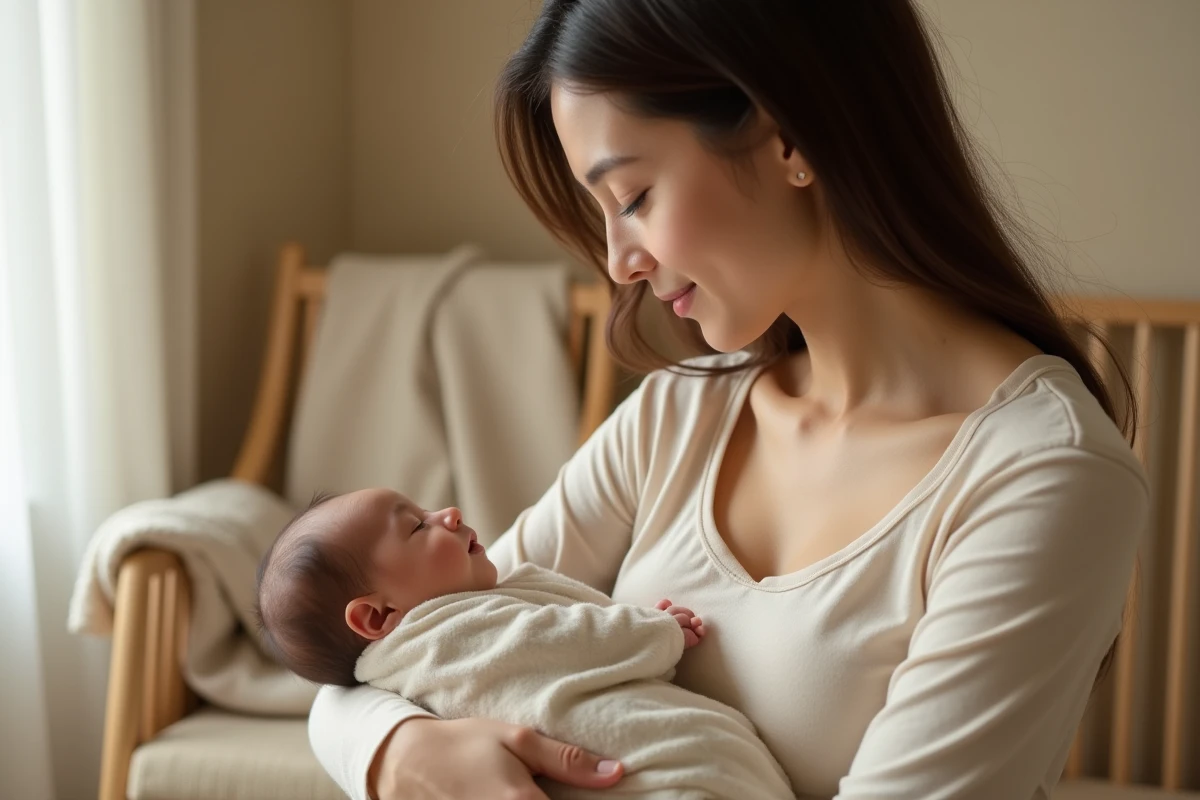
The baby’s recognition of the mother does not begin at birth. It starts several weeks before delivery, through sensory channels that are often underestimated. Understanding at what age a baby recognizes their mom involves distinguishing the different senses involved, their order of activation, and how they overlap over the months to form a stable attachment bond.
Sensorial Timeline: How the Baby Recognizes Their Mother Sense by Sense
| Sensory Channel | Start of Recognition | What the Baby Perceives |
|---|---|---|
| Hearing | Last trimester of pregnancy | Maternal voice filtered by amniotic fluid, prosody, heartbeat |
| Smell | First hours of life | Smell of amniotic fluid, then colostrum and skin |
| Sight (blurry) | First days | Contours of the maternal face at less than 30 cm |
| Touch / posture | First weeks | Way of holding, pressure of hands, skin-to-skin |
| Sight (clear) | Around 3-4 months | Facial features, expressions, distinction between familiar/stranger |
| Global recognition | Around 7-8 months | Combination of all senses, separation anxiety |
This table highlights a often overlooked fact: the maternal voice is the very first reference for the baby, long before the face. The fetus hears and memorizes its mother’s prosody during the last trimester. At birth, it already turns its head towards this voice rather than towards that of another woman.
Smell takes over in the first hours. The newborn placed on its mother’s belly crawls towards the breast guided by the scent of colostrum, chemically similar to amniotic fluid. This olfactory bridge between intrauterine life and air life constitutes a remarkable thread of sensory continuity.
Recent imaging studies confirm that the newborn’s brain activates its facial processing areas specifically in response to the maternal face from the very first hours, revealing a very early multimodal recognition of the primary caregiver. To delve deeper into this timeline, you can read on Your Health Assistant a supplementary file on the subject.
Recognition of the Maternal Face: A Capacity Built in Stages
Vision is the least mature sense at birth. The newborn distinguishes contrasting shapes at a distance of about 20 to 30 cm, which is the distance between the crook of the arm and the face of the parent holding them. This is not a coincidence: this distance corresponds to the maximum sharpness zone of their immature visual system.
During the first weeks, the baby identifies the general contours of the face (hairline, shape of the head) rather than fine details. They recognize their mother more through a set of signals (smell, voice, warmth) than through sight alone.
The Turning Point at 3 to 4 Months
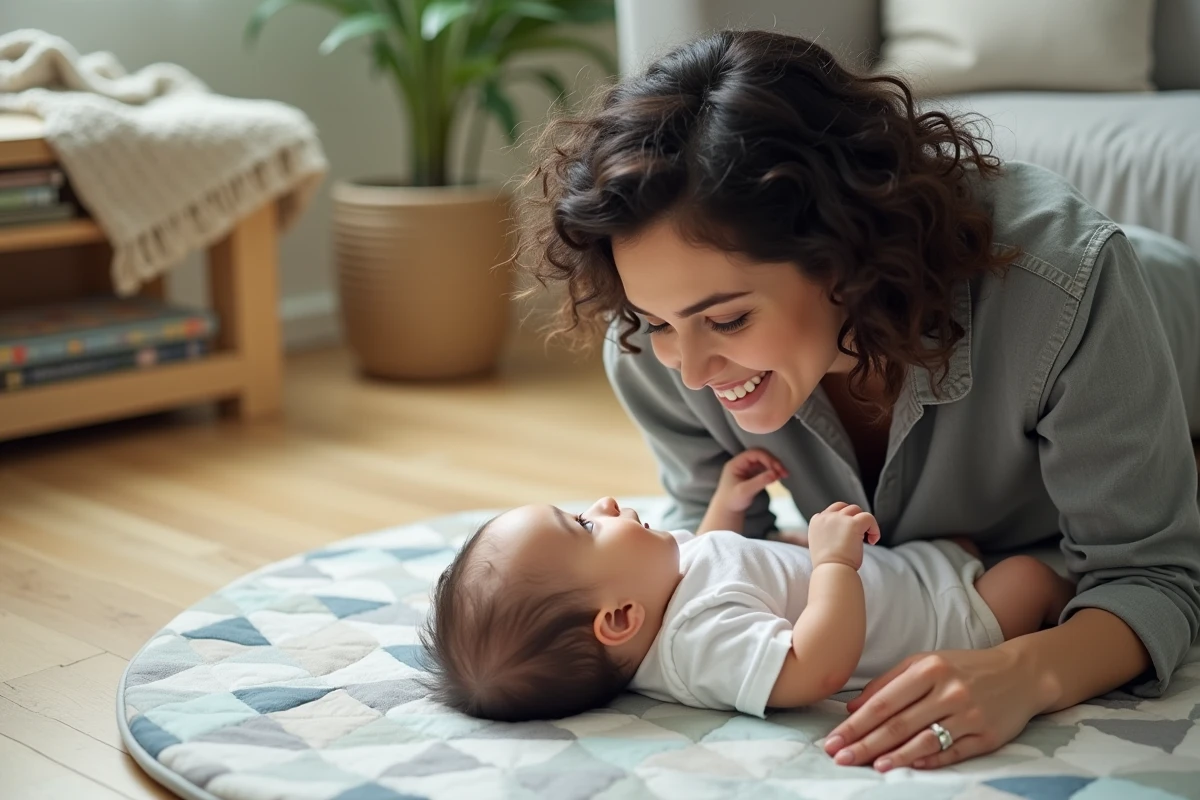
Between 3 and 4 months, the maturation of the visual cortex allows the baby to distinguish precise facial features. They fixate longer on a familiar face, smile selectively, and show a clear preference for their mother or the person who provides daily care. The selective social smile marks a milestone in visual recognition.
However, at this age, the baby does not yet show distress in response to an unfamiliar face. This reaction appears later, usually around 7-8 months, with what is commonly referred to as the eighth-month anxiety.
Attachment and Recognition: What a Baby Signals Between 7 and 12 Months
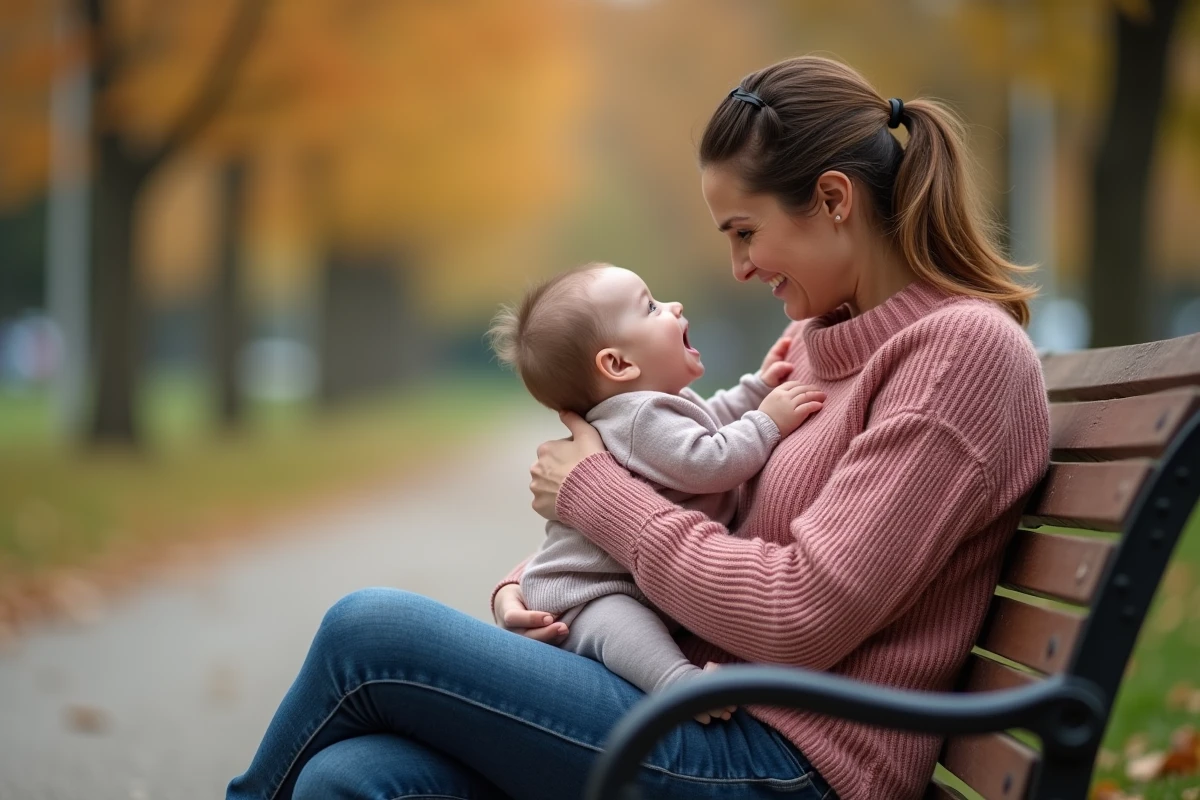
Around 7-8 months, the baby combines all their sensory channels to identify their mother globally. They recognize her by her voice, smell, silhouette, and the way she holds them. They protest when she moves away, reach out for her, and show distrust towards unfamiliar people.
These behaviors are reliable markers of the attachment bond. They reflect the baby’s ability to clearly distinguish familiar figures from strangers and to use the parent as a secure base.
- Prolonged gazes and smiles directed at the mother or father upon reunions
- More frequent vocalizations in the presence of the primary caregiver
- Approach gestures (reaching out, crawling towards the parent) from 7-8 months
- Visible distress during separation, quick calming upon the parent’s return
Developmental clinicians consider that a baby who does not seek their mother around 7-10 months is a warning sign. The absence of shared gazes, selective smiles, or reaching gestures may warrant screening, just like a delay in motor or language development.
Skin-to-Skin and Prematurity: Compensating for Early Separation
For premature babies, the initial separation in the incubator alters the timeline described above. The premature baby does not benefit from the same immediate sensory contact with their mother: the smell is masked by disinfectants, carrying is limited, and the voice comes through plexiglass.
Recent studies on the attachment of premature babies show that the early establishment of prolonged skin-to-skin contact in neonatology largely compensates for this separation. Babies who benefit from it subsequently show more gazes towards their mother, more vocalizations, and better stress regulation in her presence.
This finding also applies to mothers who do not feel an immediate connection with their baby at birth, whether the baby is premature or not. The attachment bond does not require a “love at first sight” to develop. It is woven through the repetition of care, physical proximity, and responsiveness to the baby’s signals.
When the Mother-Child Bond Does Not Seem Immediate
The social pressure surrounding the instant mother-baby connection rests on a simplified view of attachment. In practice, many mothers describe a feeling of disconnection in the first weeks, without compromising the quality of the bond that develops later.
The baby, for their part, builds their recognition progressively. Each care moment, each vocal interaction, each carrying moment enriches their sensory map of the mother. The consistency of responses to the baby matters more than the emotional intensity felt at the first moment.
- Talking to the baby during care reinforces vocal recognition
- Skin-to-skin contact stimulates olfactory and tactile recognition
- Close-range gazing (during breastfeeding or bottle feeding) helps mature visual recognition
The development of the attachment bond follows a biological timeline that maternal emotions accompany without conditioning it. A baby whose mother reliably responds to their needs develops a secure attachment, whether the feeling of maternal connection appeared at the first second or after several weeks.